A CRM shaped like you
Your stages, your fields, your approvals and your vocabulary. Sales, service and operations share one customer record, each with the screens they actually need.
// Services / CRM
Custom CRM development for companies that have outgrown spreadsheets, or are fighting a SaaS CRM that almost fits. We build the pipeline, the back office and the integrations around your process, with an AI assistant that answers new SMS, chat and email leads the moment they arrive.
// 01
Your stages, your fields, your approvals and your vocabulary. Sales, service and operations share one customer record, each with the screens they actually need.
An assistant replies to SMS, chat and email leads at any hour, asks the qualifying questions, books the next step, and hands the conversation to a person when it should.
Website forms, ad platforms, phone, email, accounting and ERP connected through their APIs, older systems included. One customer, one record, no copy and paste.
Booking, inventory, orders, compliance and operations modules next to the CRM, the way we built back offices for ibon, Wiser and Escape Show.
Reminders, task assignment, no-show rebooking, review requests and stale-deal alerts, running on rules your team can read and change.
We move your data out of the old CRM or spreadsheets, clean the duplicates, and give you lead-source-to-revenue reports on numbers everyone trusts.
// 02
Start with the honest question. Off-the-shelf CRMs are good products, and for many teams a well-configured one is enough. A custom CRM makes sense when one or more of these is true:
There is a middle path too: keep a SaaS CRM and build the missing pieces around it. We look at all three options before recommending one. Our article on custom CRM vs off-the-shelf walks through the decision in detail.
The newest reason to build is AI. A lead that waits hours for a reply often goes to whoever answered first. So we build CRMs where an AI assistant is part of the pipeline, not a plugin bolted on top:
This is not theory for us. We run our own CRM, with an AI assistant answering SMS, chat and email, on the lead pipelines of our own businesses. Every lead lands in it, is answered at once and is tracked through to the result. When we build yours, we bring what we have learned running ours. For AI across the rest of your organisation, see AI implementation and AI development.
A CRM is only as useful as the data flowing into it. On the Mazda CX5 campaign we built a custom landing page connected to several unique and complex CRMs, so every lead reached the right system without anyone re-typing it. That is the daily reality of CRM work: forms, ad platforms, phone systems, accounting software and ERPs, each with its own API, quirks and failure modes.
We build integrations to be watched: retries when a system is down, alerts when data stops arriving, and logs that show where any record came from.
Many organisations do not need just a CRM. They need the operations around it. Our back-office work includes:
When your CRM, bookings, inventory and billing share one data model, reports stop disagreeing with each other.
You own the code and the data. You get a working core pipeline early, then integrations and AI in phases, each one used by your team before the next begins. Cost is driven by integrations, data migration, roles and permissions, AI channels and mobile access, and we explain each one before you commit. If your CRM is part of a larger platform, our custom software development team builds the rest.
We work from Toronto and Tel Aviv. Tell us how a lead becomes a customer at your company today, and we will show you what a CRM built for that would look like.
// 04
Real projects for real clients. Open one for the details.
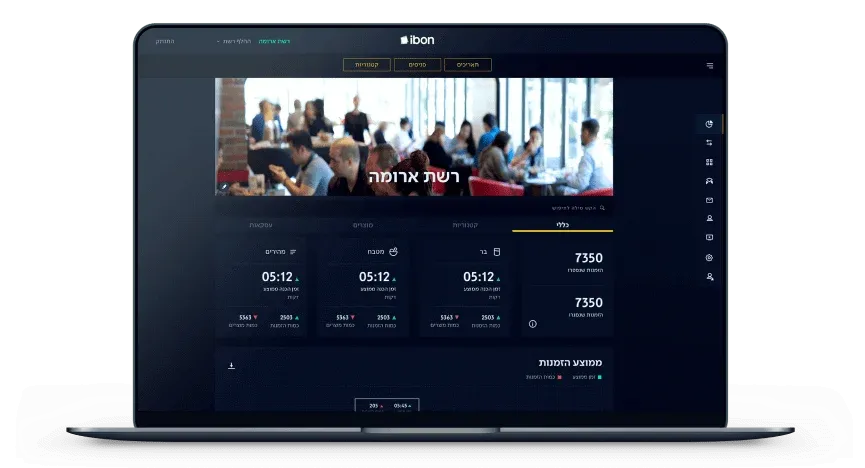
Use case
Ibon's success in managing online orders from inception to scalability

campaign · landing page
Landing page for Mazda CX5
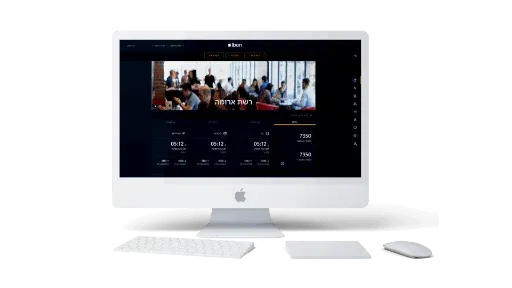
special · startups
ibon is a platform for managing and monitoring companies and organizations in the food industry.
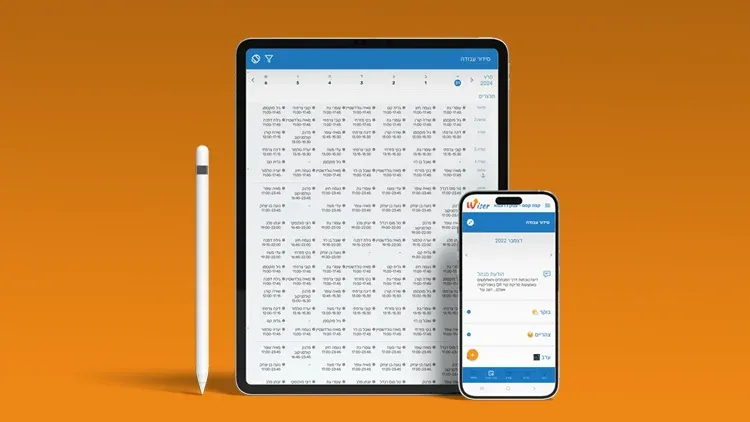
apps
Our development here for Wiser is designed to simplify complex processes, saving businesses both time and money.
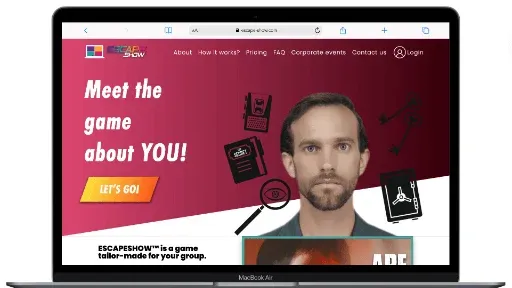
a to z · games
An e-commerce website for ordering virtual escape room games
// 05
We map how a lead becomes a customer today: every channel, handoff, spreadsheet and workaround.
Build, buy or extend. If a SaaS CRM fits, we say so. If not, we scope only the parts worth building.
Core pipeline first, in short releases your team uses and comments on from the early weeks.
Integrations, data migration and the AI lead assistant, tested on real conversations before go-live.
Training, monitoring and ongoing changes as your process and your team grow.
// 06















// 07
Not always. If your process is close to standard sales, a well-configured SaaS CRM is often the right call, and we will tell you so. A custom CRM wins when your process is your advantage, when you are paying for features you fight against, or when you need integrations and rules a generic product cannot handle. Our article on custom CRM vs off-the-shelf goes deeper.
The number of integrations, how messy the data migration is, how many roles and permission levels you need, which channels the AI assistant covers, and whether you need mobile access. We map your process first and then give you a written estimate, phased so the core pipeline is useful before the extras are built.
Yes. It replies the moment a lead arrives, asks your qualifying questions, books the next step and writes everything to the customer record. It follows rules you set, and passes the conversation to a person when a lead is complex or asks for one. We run this setup on the lead pipelines of our own businesses.
That is usually the point of building one. The landing page we built for the Mazda CX5 campaign was connected to several unique and complex CRMs, and we integrate forms, phone, email, accounting and ERP systems through their APIs.
You do. The code, the database and the data belong to your organisation, hosted where you choose. No per-seat licence to us, and no lock-in if you later bring development in-house.
Yes. We have offices in Toronto and Tel Aviv, and we work with clients across Canada, Israel, the USA, Europe and Australia. Hebrew readers can see our Hebrew CRM page.
// 08
We bring AI into how your organisation works: the right use cases, your systems, your privacy rules, your people.
Custom GPT assistants, RAG search over your documents, AI agents and data pipelines, built by engineers and run in production.
Web apps, platforms, real-time dashboards and admin panels, built around how your business actually runs.
Tell us what you are trying to do. One of our awesome dinos will get back to you shortly.
// Projects delivered for clients in
Tell Dino about your project
Thank you! Your message is on its way, and one of our dinos will be in touch shortly.
