Assessment and roadmap
We sit with the teams who do the work, map where the hours go, and hand you a ranked roadmap: what to automate first, what to leave alone, and what each step needs.
// Services / AI
DevDino is an AI implementation partner for mid-market companies, enterprises and nonprofits. We find the work AI should take over, build it into the systems you already run, and train your people to use it. Real engineers in Toronto and Tel Aviv, not a no-code reseller with a chatbot template.
// 01
Six pieces of work, in the order most organisations need them.
We sit with the teams who do the work, map where the hours go, and hand you a ranked roadmap: what to automate first, what to leave alone, and what each step needs.
Every idea is scored on time saved, risk and effort to build. You get a short list you can defend in a board meeting, not a wish list of forty pilots.
AI works inside the CRM, ERP, inbox, phone line and document stores you already run, through their APIs. No new app your team has to remember to open.
We design for PIPEDA, Quebec Law 25 and Israel's Privacy Protection Law: data mapping, access rules, retention, and hosting and model choices that keep personal data where it belongs.
Role-by-role training, written playbooks and a champion in each team, so the people whose work changes help shape it and adoption does not stall after launch week.
We record a baseline before we build and track the same numbers after go-live: response times, hours per task, error rates, leads handled. You see what AI is really doing.
// 02
Most organisations do not need one more subscription. They need AI to do real work inside the systems their people already open every morning. That is what AI implementation means at DevDino: we start from the work, not the technology, and we finish when your team is using it and the numbers show it.
We are an engineering company first. The same team that built ibon, a food-industry management platform used in over 80 Aroma branches, and a real-time production performance application for Netafim, builds your AI integrations. That matters, because the hard part of AI adoption is rarely the model. It is the connection to an ERP older than some of your staff, the permissions on a shared drive, and the edge case nobody wrote down.
It also matters who is on the other side of the table. The AI consulting market, in Toronto and across Canada, is full of small-ticket shops selling one chatbot template to everyone. We build for organisations where an outage, a privacy slip or a confused customer has a real cost: broadcasters like Keshet, manufacturers like Netafim, restaurant chains like Aroma, institutions like the Jewish Agency.
Four kinds of work are usually the best place to start.
An AI assistant answers calls, web chat, SMS and email the moment they arrive. It qualifies the enquiry, books the appointment or routes it to the right person, and calls back the people you missed. Nothing waits for Monday morning. We run a CRM with an AI assistant on the lead pipelines of our own businesses, so we know where an assistant helps and where a human should take over.
Intake forms that turn into records. Reminders and follow-ups that send themselves. No-show rebooking, review requests, billing nudges, and weekly reports that assemble overnight. Each one is small. Together they free skilled people for the work you hired them to do.
Invoices, applications, contracts and forms are read, classified and entered into the right system, with a person approving anything the AI is not sure about.
A private assistant that answers staff questions from your policies, procedures and past work, cites the source document, and only shows each person what they are allowed to see. Our AI development page explains how we build these with retrieval over your own documents.
In Canada, organisations work under PIPEDA, and those in Quebec also under Law 25, which adds duties around automated decisions and privacy impact assessments. In Israel, the Privacy Protection Law applies. We design every implementation for the rules that apply to you:
We design for these laws; we do not claim a certification, and your counsel signs off. What we give them is clear documentation to work from, instead of a vendor’s marketing page.
An AI rollout rarely fails in the demo. It fails a few weeks later, when the team quietly goes back to the old way because nobody showed them the new one. So training is part of the project, not an add-on: short sessions per role, written playbooks, and a champion in each team who collects feedback and tells us what to fix.
Measurement starts before we write any code. We record a baseline for the workflow we are changing: response time, hours per task, error rate, leads answered after hours. After go-live we track the same numbers, report them to you, and use them to decide what goes next on the roadmap. If a use case is not paying its way, you will hear it from us first.
Whoever you hire, ask these questions:
We have built software for clients in Canada, Israel, the USA, Europe and Australia, from offices in Toronto and Tel Aviv. Our name might be Dino, but we would rather your processes were not the fossils. For a step-by-step view, read how to implement AI in your organisation. If AI leads you to rethink how you manage customers, see custom CRM development, and if you need someone to own the whole technical picture, meet our technology partner service. Hebrew speakers can read this page in Hebrew.
Tell us which part of your organisation feels slowest, and we will show you what AI can realistically do about it.
// 04
Real projects for real clients. Open one for the details.
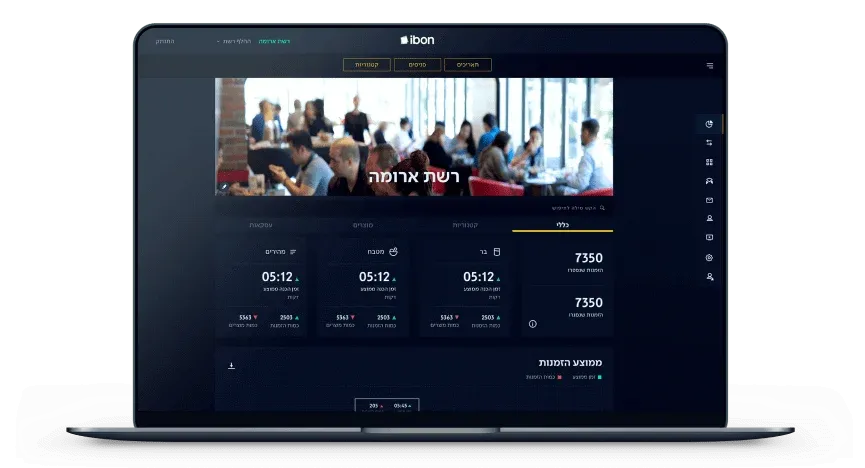
Use case
Ibon's success in managing online orders from inception to scalability
special · startups
ibon is a platform for managing and monitoring companies and organizations in the food industry.
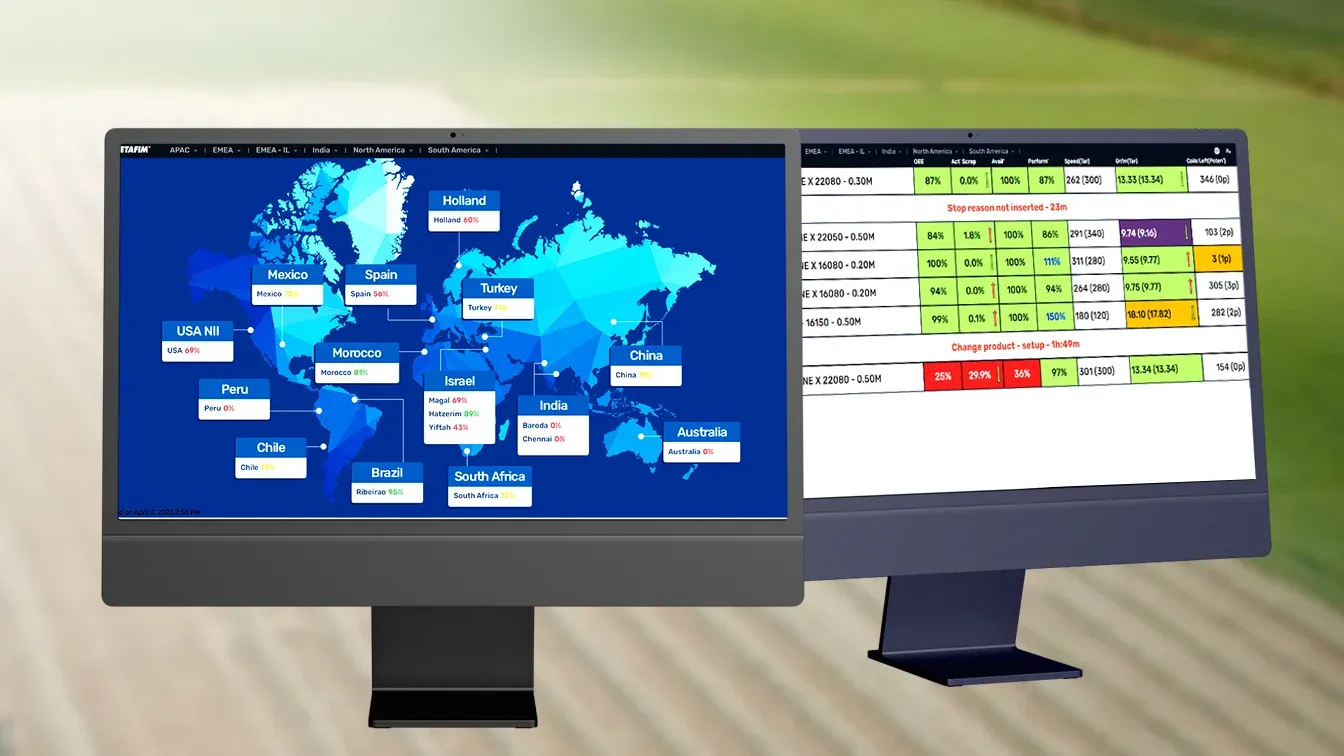
Project
Introducing the new web-based OEE application for Netafim! Our innovative solution offers real-time insights into production performance, empowering Netafim to make quick and effective decisions that...

Project
A deep webs/software development we did (and still do.) for the biggest broadcasting channel in Israel - ''Keshet 12''.
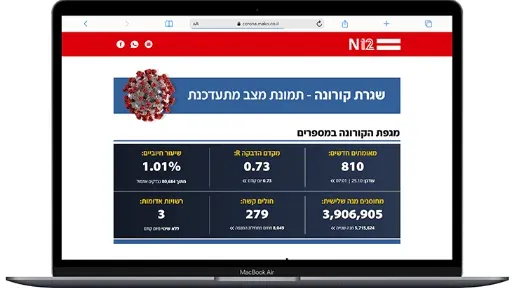
special · website
The COVID-19 panel on N12 news website and app.
// 05
Interviews, workflow mapping and a look at your systems and data. It ends with a ranked use-case list and a roadmap.
One high-value use case built on your real data, tested by the team that will use it, measured against the baseline.
Connected to your production systems with access controls, logging and a human in the loop where it matters.
Role-based training, playbooks and champions inside each team, so the new way of working sticks.
Regular results against the baseline, then the next use case on the roadmap.
// 06















// 07
It takes AI from an idea to something your staff use every day. That means choosing the use cases, connecting AI to your systems and data, handling privacy, training people and measuring the outcome. At DevDino the same engineers who write the plan also build it, so nothing gets lost between the strategy deck and production.
With the work, not the tool. Look for tasks that are frequent, rule-heavy and text-heavy: answering enquiries, sorting documents, re-keying data, finding answers in policy files. Our assessment ranks them by value and risk so your first project earns its keep. Our guide on how to implement AI in your organisation walks through the steps.
Yes, if it is designed that way from the start. We map the personal information involved, limit what reaches a model, pick hosting and providers that fit your data residency needs, and document it all for your privacy officer. We design for PIPEDA, Law 25 and Israel's Privacy Protection Law; we hold no certification, and your counsel has the final word.
We design it to take the repetitive part of a job: the first reply, the data entry, the search through old documents. People keep the judgement calls and the relationships. Change management is part of every project, because the new workflow works best when the people doing the job help design it.
A tool gives you features. Implementation gives you a working process. We are tool-agnostic: sometimes the right answer is a well-configured product you can buy, sometimes it is a custom AI build. Either way it connects to your systems, and you own the setup, the prompts and the code.
It depends on how many systems are involved and how tidy the data is. We work in stages, so you see one use case working on real data early instead of waiting for a long programme to finish. The assessment ends with a dated plan you can hold us to.
Yes. We work with companies, enterprises and nonprofits from our offices in Toronto and Tel Aviv, and have delivered projects for clients in Canada, Israel, the USA, Europe and Australia. Jewish organisations can also see our page for Jewish organisations.
// 08
Custom GPT assistants, RAG search over your documents, AI agents and data pipelines, built by engineers and run in production.
A CRM built around how you sell and serve, with AI that answers leads and integrations into the systems you already run.
A CTO's judgement and a full team's hands: roadmap, architecture, vendors and delivery, without hiring a full-time CTO.
Tell us what you are trying to do. One of our awesome dinos will get back to you shortly.
// Projects delivered for clients in
Tell Dino about your project
Thank you! Your message is on its way, and one of our dinos will be in touch shortly.
